IWS Group is resetting the bar on impact safety, with PAS 13 barrier range certified by TÜV Nord

IWS Group,  has impact tested its Brandsafe® range of polymer safety barriers according to the rigorous PAS 13 code of practice, which has been third-party accredited by TÜV Nord, an internationally recognised seal of quality.

The testing process measures the impact resilience of these barriers, enabling customers to make informed choices about the right systems for their needs. By adhering to PAS 13, IWS Group is among a select few companies committed to the highest safety benchmark in the industry today.

Testing of the barrier range took place in April 2023 at an IWS subsidiary,  Rack Group in Barnsley, where the barriers are designed and manufactured. A custom-built pendulum was used to strike the barriers at various points to measure the resilience of the barrier. How much force the barrier could take, as well as how much it deflected, was recorded on-site using high-spec measuring equipment.

Commenting on what the testing means for customers, Susy Keating, MD at Brandsafe said, “This testing is an important step for customers looking to purchase impact protection barriers for their workplace. Knowing what impact forces a barrier can take, as well as ensuring that data is independently certified by a reputable third party, is a vital factor in choosing the right barrier. For too long impact protection has been over-engineered, over-priced and overly complicated. It’s time to reset the bar on what impact protection ultimately comes down to, which is keeping people and products safe.”

Stuart Ovington, MD of Rack Group said, “TÜV Nord independently verifying that our testing abided by the PAS 13 guidelines serves as a testimonial to our teams here at IWS Group, as well as the quality of our polymer barrier range. Not every barrier manufacturer undertakes product testing to this level, so we are proud to be amongst the industry leaders. Our barriers are shown to be high performing, long-lasting and can withstand greater impacts than similar, industry-leading products. In addition, we can create bespoke designs quickly to suit individual needs and, with short lead times, provide a cost-effective solution at the highest standard.”

Matt Mason, Group Design Manager at IWS Group added, “We undertook this activity to prove the capability of our barrier range and, with TÜV Nord witnessing, it confirms that our internal testing procedure adheres to the industry code of practice.

Testing is conducted on a purpose-built impact pendulum rig designed and commissioned entirely by IWS Group, which simulates real world impact energies of material handling vehicles travelling at different speeds and provides physical proof to the capability of our products.

The pendulum strikes barriers at various pre-determined locations to measure the level of energy the barriers can withstand, how much deflection they display under impact and how much force is transferred to the ground fixings and concrete. Testing also defines the distance behind barriers that is considered the ‘safe zone’ for the barrier to deflect in to, which is identified during installation of the barrier by visual floor markings.

All testing was conducted with UKAS calibrated measuring equipment such as high-speed cameras, torque wrenches, load cells and industrial weigh scales to ensure confidence in every result witnessed.”

To find out more about the Brandsafe® polymer barrier range and the impact safety testing that has been carried out, visit brandsafeprotection.com or request the technical data by emailing sales@brandsafeprotection.com.

Safety, simplified.


How are these barriers designed to withstand impact?

The flexible barrier design and polymer material are engineered to absorb the load of impact, away from a vehicle and ground fixings to reduce damage and repair time, unlike metal barriers.

The benefits from such a design means customers will lower their repairs and maintenance cost compared to metal barriers and reduce vehicle impact damage and downtime.

Maintenance is lowered as these polymer barriers don’t rust, corrode, fade or require re-painting, and only need replacing after frequent, major impacts have occurred.

They are also fully recyclable, non-toxic and suitable for use in food production and freezer environments.

About IWS Group

IWS Group is a family of market-leading product brands, manufacturers and service companies, providing essential services and supplies to the logistics, material handling and other industrial sectors across Europe and beyond. The group consists of four companies:

Impact Safety Specialist, Brandsafe

Industrial Racking Specialist, Rack Group

Visual Management Manufacturer & Specialist, Beaverswood

Exclusively Trade Shelving & Storage Specialist, Anco 

Discover more at www.iws.group
PAS 13: The Code of Practice for Safety Barriers explained

The official best practice for safety barriers and traffic management in industrial facilities

PAS 13 Code of Practice for Safety Barriers was developed by the British Standards Institution (BSI), and is published as the Publicly Available Specification (PAS) 13, Code of practice for safety barriers used in traffic management within workplace environments with test methods for safety barrier impact resilience.

What is PAS 13 code of practice?

PAS 13 is the only code of practice for industrial safety barriers that is recognised globally. It is intended to be used as a reference for engineers, architects, contractors, health and safety professionals, and other stakeholders involved in the design, construction, deployment and maintenance of safety barriers. The code is based on the principles of risk assessment and recommends selecting the appropriate safety barriers based on the potential hazards and risks.

Compliance with PAS 13 can help ensure that safety barriers are effective in protecting people and assets from potential hazards and minimize the risk of accidents and injuries.

PAS 13 compliant
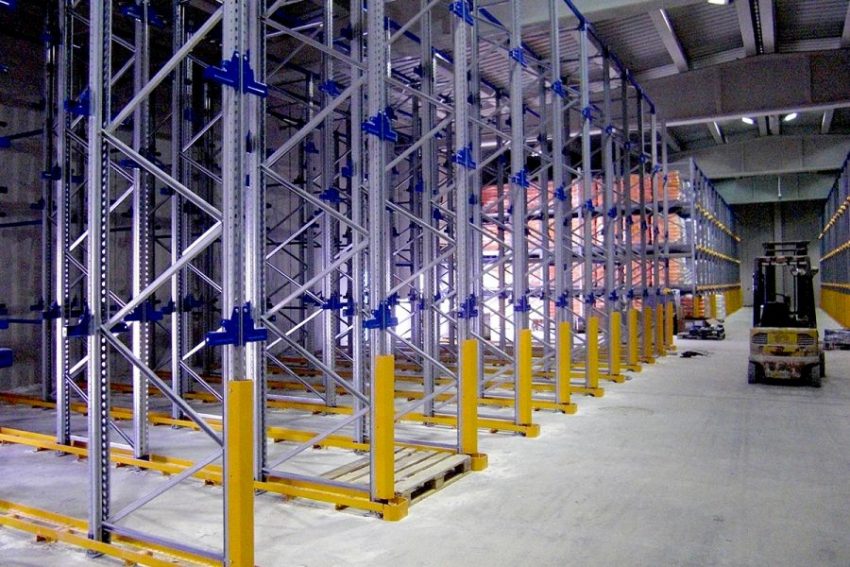
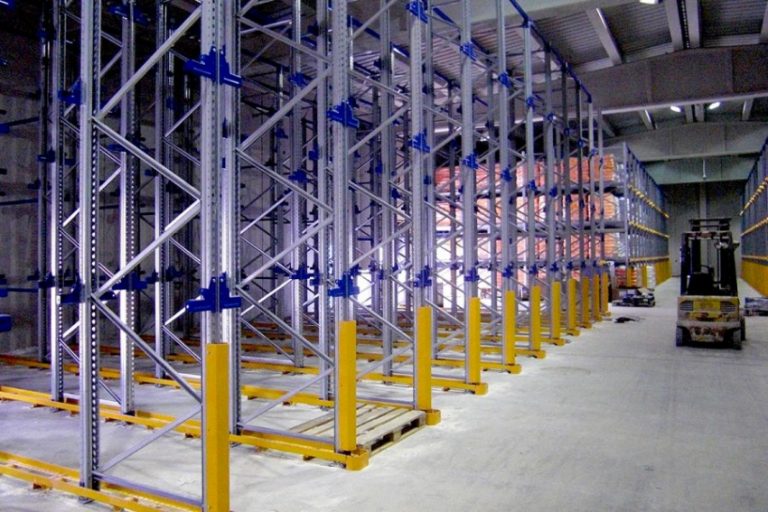
Rack Group Installations   Drive In Racking

Why was PAS 13 created?

The consequences of workplace accidents and injuries can be severe. They can result in lost productivity, downtime, and increased maintenance and repair costs. Moreover, they can lead to long-term health problems for employees and even legal and financial liabilities for the company.

According to Health and Safety Executive statistics approximately 50 people are killed each year, and more than 5,000 injured, in accidents involving workplace transport. PAS 13 outlines the current good practice traffic management procedures for a workplace and provides a standard for the safety barriers within them.

Mixing vehicles and pedestrians increases the risk of potential accidents, so it is imperative that steps are taken to minimize the associated risks. PAS 13 gives recommendations for impact resilience, dimensions and positions of safety barriers in the workplace; guidance on how to manage the risks associated with vehicles within the workplace; and specifies the criteria for testing the impact resilience of a barrier.

Who created PAS 13?

PAS 13 was created and published by the British Standards Institution in association with the Health and Safety Executive. The BSI worked with a steering group made up of many high-profile blue-chip companies. These companies were able to offer first-hand experience of safety across a range of industries, to create a consistent and transferable set of guidelines for barrier installation.

Overview of PAS 13

PAS 13 is a code of practice for industrial safety barriers that provides comprehensive guidance on good practice for using industrial safety barriers. As mentioned earlier, it is an official document produced by the British Standards Institution (BSI) and is globally recognised as the most reliable code of practice for industrial safety barriers.

PAS 13 is broken down into two sections. The first section provides Health and Safety and Operations managers with detailed guidance on the correct application of safety barriers at busy industrial facilities. This section includes recommendations on how to select the appropriate barrier system based on the level of risk, traffic flow, and environmental conditions.

The second section of PAS 13 is primarily for safety barrier manufacturers. It covers how to conduct standardised testing of safety barriers for strength and durability and record results in a way that is clear and transparent for customers. This section of PAS 13 helps manufacturers ensure that their products meet the required strength and durability standards, giving customers peace of mind when selecting their barrier systems.


Advantages of using impact barriers in industrial workplaces

The use of impact barriers in industrial workplaces can have numerous benefits, including:

Racking protection

Impact barriers can also provide protection for racking and other storage systems. In busy industrial facilities, forklifts and other vehicles can cause damage to racking, which can be costly to repair or replace. Impact barriers can absorb the force of collisions, minimizing damage and reducing maintenance and repair costs.

Pedestrian protection

Impact barriers can be used to create safe pedestrian walkways in busy industrial facilities. By separating pedestrian areas from areas where vehicles are operating, the risk of accidents is greatly reduced. This can help to create a safer working environment and reduce the risk of accidents.

Forklift damage

Forklifts are a common cause of damage in industrial facilities, and collisions with other vehicles, racking, and equipment can be costly to repair. Impact barriers can help to absorb the force of collisions, reducing the risk of damage to forklifts and other vehicles.

Maintenance and repair costs

By reducing the risk of damage to racking, equipment, and vehicles, impact barriers can also help to reduce maintenance and repair costs. In addition, impact barriers themselves are designed to be durable and long-lasting, reducing the need for frequent replacement.

Employee safety

One of the most significant benefits of using impact barriers is the increased safety of employees. Impact barriers are designed to protect employees from accidents caused by moving machinery, falling objects, and collisions with vehicles. By providing a physical barrier between employees and potential hazards, the risk of injury is greatly reduced.

The use of impact barriers in industrial workplaces can have numerous benefits, including increased employee safety, protection for racking and other storage systems, safe pedestrian walkways, reduced damage to forklifts and other vehicles, and lower maintenance and repair costs. By investing in impact barriers and following the guidelines set out in PAS 13, companies can create a safer working environment and improve the efficiency of their operations.


PAS 13 benefits 

Health and safety managers, procurement specialists, directors, facility managers, project managers and site safety leaders will benefit from PAS 13. It will also likely be of interest to those who want to apply traffic management procedures and those who test and measure the performance of safety barriers will also benefit from PAS, and manufacturers and distributors of safety barriers.

Here are some of the ways Implementing PAS 13 can greatly improve the use of impact barriers in industrial workplaces:

  • Clear guidelines for barrier selection: PAS 13 provides detailed guidelines for the correct application of safety barriers in industrial facilities. This includes information on the selection of barriers that best fit the needs of the facility, taking into account factors such as vehicle types, traffic flow, and the potential for impact.
  • Standardised testing for barrier strength and durability: The second section of PAS 13 covers how to conduct standardised testing of safety barriers for strength and durability, and record results in a way that is clear and transparent for customers. This ensures that all barriers used in the facility meet a consistent standard for safety and durability.
  • Improved traffic management: The guidelines set out in PAS 13 can also help to improve traffic management in industrial facilities. By using barriers to separate pedestrian walkways from areas where vehicles are operating, the risk of accidents is greatly reduced. This can help to create a safer working environment and improve the efficiency of operations by reducing downtime due to accidents.
  • Safety: The primary objective of impact barriers is to prevent accidents and protect workers from hazards. By manufacturers following the recommendations and requirements set out in PAS 13, customers can ensure that their safety barriers are properly designed and installed to provide maximum protection for workers.
  • Risk assessment: PAS 13 emphasises the importance of conducting a thorough risk assessment before installing safety barriers. This helps businesses identify potential hazards and ensure that their safety barriers are designed to address these specific risks.
  • Cost-effectiveness: Properly designed and installed safety barriers can help reduce the risk of accidents and damage to equipment and products, which can ultimately result in cost savings for businesses.

In conclusion, the use of impact barriers in industrial workplaces is essential for protecting employees and equipment from harm. The implementation of the PAS 13 code of conduct for industrial safety barriers provides a reliable and effective means of ensuring that the correct barriers are selected and used in the workplace. PAS 13 provides clear guidelines for barrier selection, standardised testing for barrier strength and durability, improved traffic management, reduced maintenance and repair costs, and compliance with safety regulations.

By following the guidelines set out in PAS 13, companies can create a safer working environment and improve the efficiency of their operations. Investing in high-quality impact barriers that meet PAS 13 standards not only reduces the risk of accidents but also protects the company from liability and reduces maintenance and repair costs over time.

Therefore, we highly recommend that all industrial workplaces use the PAS 13 code of conduct when selecting and implementing impact barriers. As a leading provider of impact protection barriers, our company offers a range of high-quality barriers that meet PAS 13 guidance.

Contact us today to learn more about how we can help you improve safety in your industrial workplace and view our range of barriers.

Working in the heat, is it safe?

Summer is here!

The Great British summertime might be a little... unpredictable, at times. Sun, wind, rain, hail, and anything else mother nature sends our way. But we are usually guaranteed at least a few weeks of warmth and sunshine sometime between May and September.

If you are working outside, you might rejoice in some much-needed warmth. But what about the dangers?

We have covered the risks of winter working before, and the cold. But what about summer working, is that safe? In addition to the risks you already need to control, working outside in hot weather brings two additional hazards:

• Sun
• Heat

A bit of sunshine isn't a bad thing. And it's certainly nice to feel warm. Working outdoors can be more enjoyable in the summer. But the sun and heat can also be dangerous if we don't protect ourselves.

Working In The Heat Rack Group HSQE Bulletin 0.4
Working In The Heat Rack Group HSQE Bulletin 0.1

Sun Exposure and Working Outside

The sun can make you feel great. You might go on holiday to get even more of it. For many people, a bit of sunshine is a great thing. But top up your vitamin D and not your tan, because working outdoors can expose your skin to more sun than is good for you.
It seems easy to get caught out by the sun when working outdoors. We didn't expect it. We forgot to pack the sunscreen on our way out the door. Perhaps because heatwaves don't happen as often as we would like them in the UK. Or maybe because we have other things on our mind when we go to work.

Short term skin damage from high levels of sun exposure can cause sunburn. This can be painful and uncomfortable for weeks as skin blisters and peels. Even a gradual tan will speed up the ageing of your skin over the long term.

One of the more serious dangers of sun exposure is skin cancer. Skin cancer is one of the most common types of cancer. And UV light from the sun can cause it. The British Skin Foundation says that 40,000 new cases of skin cancer are reported each year. The NHS reports that more than 100,000 new cases of non-melanoma skin cancer are diagnosed each year in the UK.

Steps To Reduce Risk Of Overexposure To UV

Overexposure to ultraviolet (UV) light is the main cause of non-melanoma skin cancer. UV light comes from the sun, as well as from artificial tanning sunbeds and sunlamps.

As an outdoor worker, it is hard to completely avoid the sun when it's out. But you can take steps to protect your skin and avoid over-exposure. This will lower your risks from some of the more harmful effects:

• Stay in the shade when possible
• Use a high factor sunscreen on any exposed skin (the higher the SPF the better)
• Re-apply sunscreen throughout the day
• Wear a hat
• Wear a top and clothing that covers the skin (especially any areas without sunscreen)
• Take regular breaks out of the sun

Working In The Heat Rack Group HSQE Bulletin 0.5
Working In The Heat Rack Group HSQE Bulletin 0.2

Working In The Heat And Heat Stress

This is the UK. How hot does it really get? Is heat a real problem? Well, yes. Especially at work. Because you're not on holiday, able to cool off in the pool or an airconditioned hotel room (unless you happen to be working on a holiday resort).

You're at work. You might be doing a really intense physical task, which is hard enough in a cool environment. Add extra heat to the mix, you're going to get hot and sweaty. You might need to wear extra PPE to protect you from other hazards of the job, which might prevent you from sweating properly and cooling off.

“Heat stress occurs when the body’s means of controlling its internal temperature starts to fail. As well as air temperature, factors such as work rate, humidity and clothing worn while working may lead to heat stress. Therefore, it may not be obvious to someone passing through the workplace that there is a risk of heat stress."
HSE Heat stress

And heat stress can be serious. It can make you feel unwell, lack concentration, get muscle cramps, faint. You can develop heat exhaustion, feeling tired and sick, get a headache and feel clammy. At its most serious, heat stroke can bring confusion, convulsions, loss of consciousness and can even be fatal.

Working Outside In The Heat

If you are working outside in the heat, you can take steps to minimise the risk of heat stress and keep cool. Here are some top tips:
• Keep hydrated
• Regular breaks
• Cool down
• Work in the shade
• Plan your work

First, stay hydrated. Cold drinks will both keep you cool and replace the water lost through sweating. You should take regular breaks out of the sun and heat, to give your body a chance to cool down and recover.

If you can work in the shade where it is cooler, do so. You can also plan your work so that more intensive tasks take place early or late when the temperature is lower.
You made need to make extra allowances. Particularly during longer spells of hot weather. Like specialist PPE to keep you cool and safe. Or installing fans and air conditioning in break areas.

Be especially careful if you're not used to working in hot environments. Your body needs time to adjust to working in the heat. If a sudden heatwave arrives, give yourself time to get used to working in hot weather. Be extra careful the first few days.

Working In The Heat Rack Group HSQE Bulletin 0.6

Don't want to miss future updates or special offers?

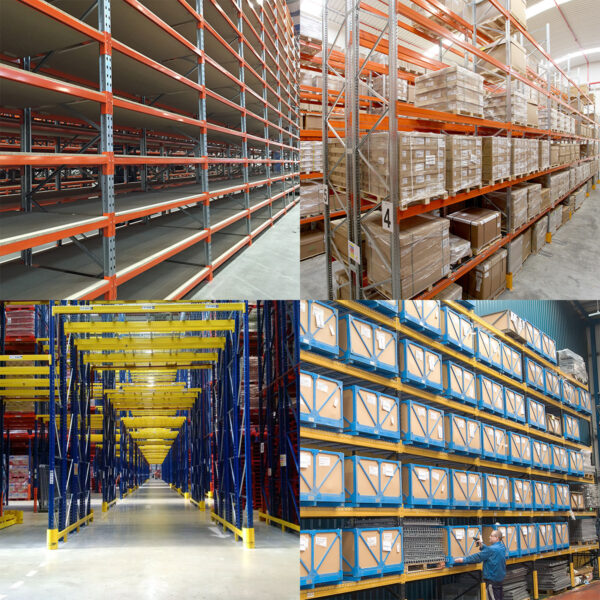
Rack Group now stock top racking manufacturers

Racking stock update

Rack Group now stock large quantities of the top racking manufacturers including:

  • AR Racking
  • Link 51
  • PSS
  • Cornix
  • Dexion

Pre-order full bays or individual components, available with installation or supply only.


Get in touch with our team today for more information.

Rack Group Top Racking Manufacturer Stockists

Link 51

We have Link 51 racking IN STOCK ready to be shipped. There is currently a 13 week lead time direct from the manufacturer, but Rack Group can deliver the following components NEXT DAY.

Current stock includes:

  • Shelving - available assembled or in kit
    • 2400 x 300
    • 2400 x 500
    • 2400 x 600

APR PALLET RACKING - available assembled or in kit

  • Uprights
    • 900 E / S
    • 1350 E / S
    • 2250 E / H / M / S
    • 4500 H
    • 5250 H
    • 6450 H
  • Beams
    • 2700 x 105
    • 2650 x 120
    • 2670 x 120
    • 2700 x 120

Cornix

Current stock includes:

  • Frames
    • 6300 x 900 M
    • 3900 x 900 M
    • 8400 x 900 M
    • 9600 x 900 M
  • Beams
    • 2700 x 110
  • Baseplates
    • S/M/H

PSS

Current stock includes:

  • Beams
    • 2700 x 110
    • 2250 x 100
  •  Uprights
    • 4050 2KL85 3.0L
    • 4650 2KL85 3.0L
    • 5250 2KL85 3.0L
  • Bracing
    • 787HC / 827OL PG
    • 907HC / 947OL PG
    • 1048HC / 1188OL

AR Racking

Current stock includes:

  • Frames
    • 6000 x 900 XS20
    • 8500 x 900 M
  • Beams
    • 2700 x 110 2000kg
    • 2700 x 150 3000kg

Speak to a member of the team today.

Subscribe to our news

Don't miss out on all the latest industry news and special offers from Rack Group! Sign up now to receive these direct to your email inbox.

A new solution for end of aisle communication

NEW shadow boards now available!

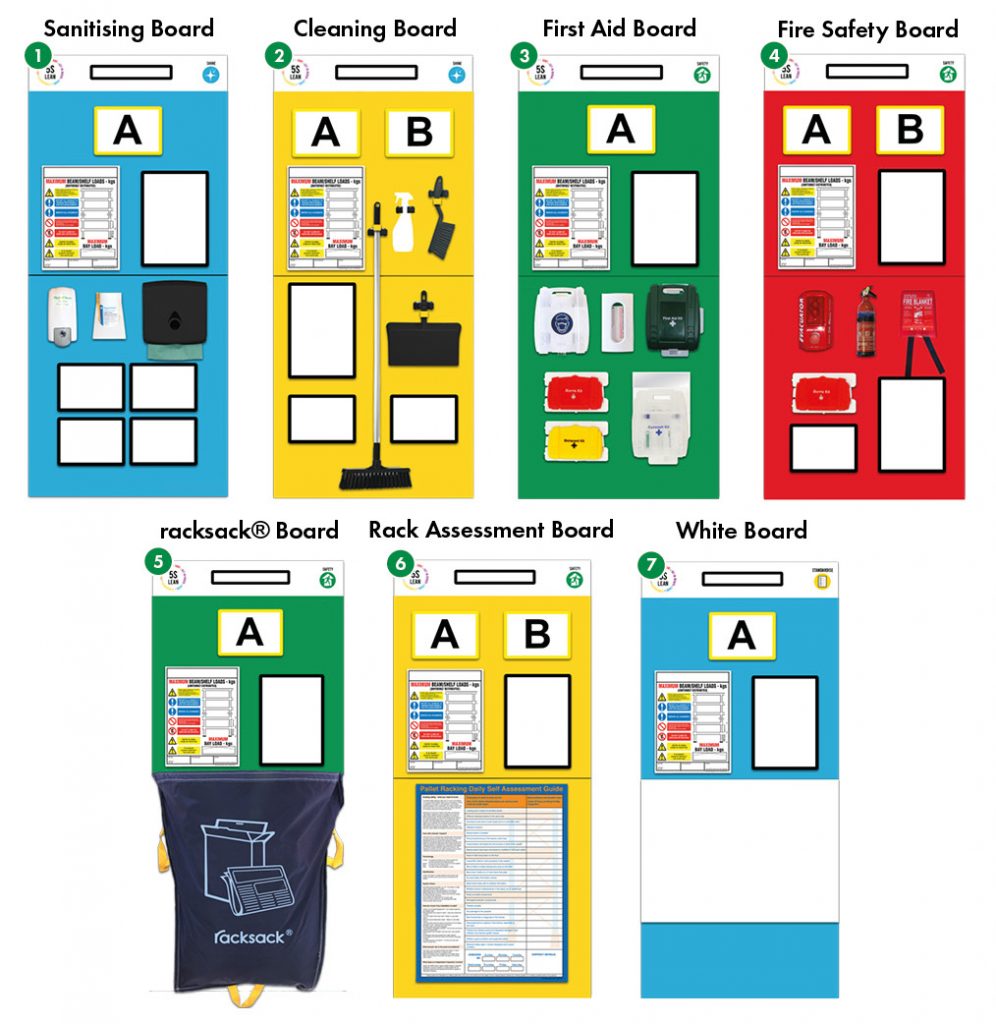
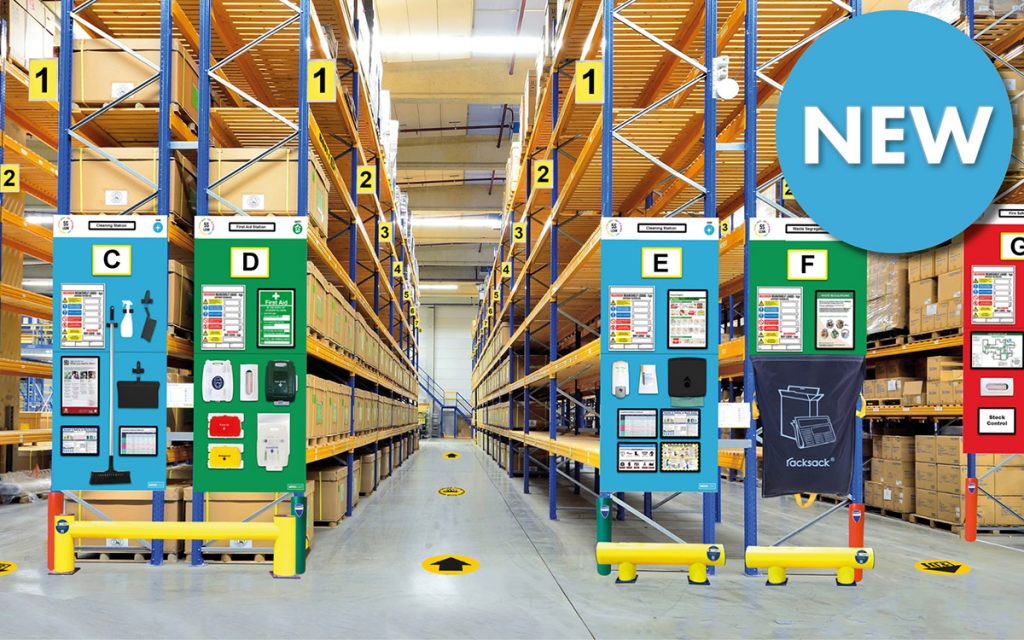
Rack Group are excited to announce a new product as part of our growing Warehouse Accessories range! Introducing the Modulean® Rack End Boards - these large shadow boards are designed for warehouse end of aisle racking systems.

Keep your warehouse organised with NEW Modulean® Rack End Boards

  • A range of standard 2000mm high x 900mm wide boards available
  • Suitable for all types of warehouse racking
  • Supplied with all products on display
  • Available with either single or double aisle markers
  • Each board is also supplied with a weight load notice


Modulean Rack End Boards 7 Varieties To Choose
Modulean Rack End Board

Available in 7 shadow board designs, each in 4 different colours

Being 2000mm high x 900mm wide, these Rack End Boards have been designed to fit warehouse end of aisle racking systems. 1100mm wide boards are also available to order to suit both sizes of pallet racking.

Each board is available with either single or double aisle markers, with easy to change inserts customised for your warehouse. Simply let us know what aisle information you need.

Supplied with the products on display including a title frame, as well as fixings, we’ve made it as easy as possible for you to install a Modulean® Rack End Board.

To help you comply with regulations, a weight load notice is also included with each board, which are mandatory for all racking. Weight load notices can be printed with weight limits and information – please confirm the details you need printed. If no information is received these will be supplied blank for you to add your information using a marker pen.

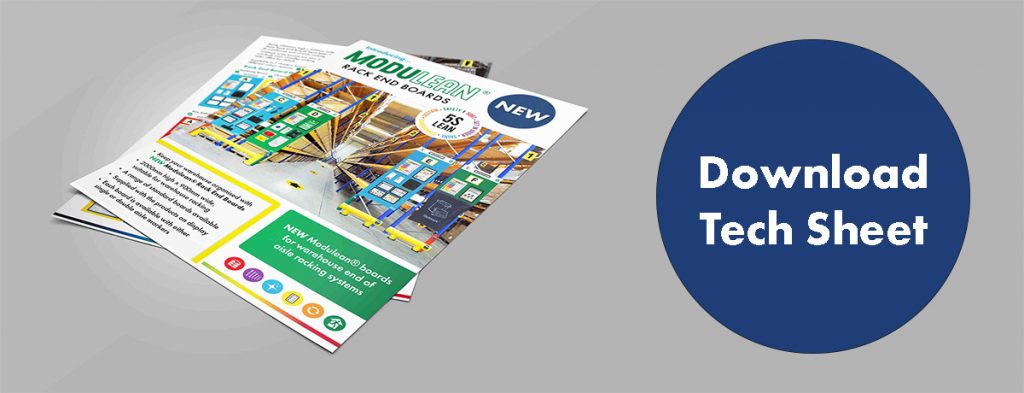
Modulean Rack End Boards Brochure Download

Speak to a member of the team today.

Is your warehouse 100% safe? Webinar

Safe Industrial And Rack Group Webinar

The Ultimate Guide to Racking Safety Audits

This is where the safety Webinar on ‘Is Your Warehouse 100% Safe? The Ultimate Guide to Racking Safety Audits’ will take place - at 2pm on 18th May 2022!

Has auditing become a lengthy, over-complicated process?

Graeme Waller, (Training Manager at Rack Group,) and Kirsty Rogers, (Managing Director at Specialist Industrials Ltd,) will discuss how to organise, plan and successfully execute your warehouse safety audit - making audits faster and easier.

This Webinar supplies all the need-to-know basics in just a 30 minute live conference, complete with a live Q&A so you can speak directly to the experts about your specific issues.

Register your FREE place here.

Don't want to miss future updates or special offers?